
A YEAR IN 13 MOONS
Posted on March 30, 2026
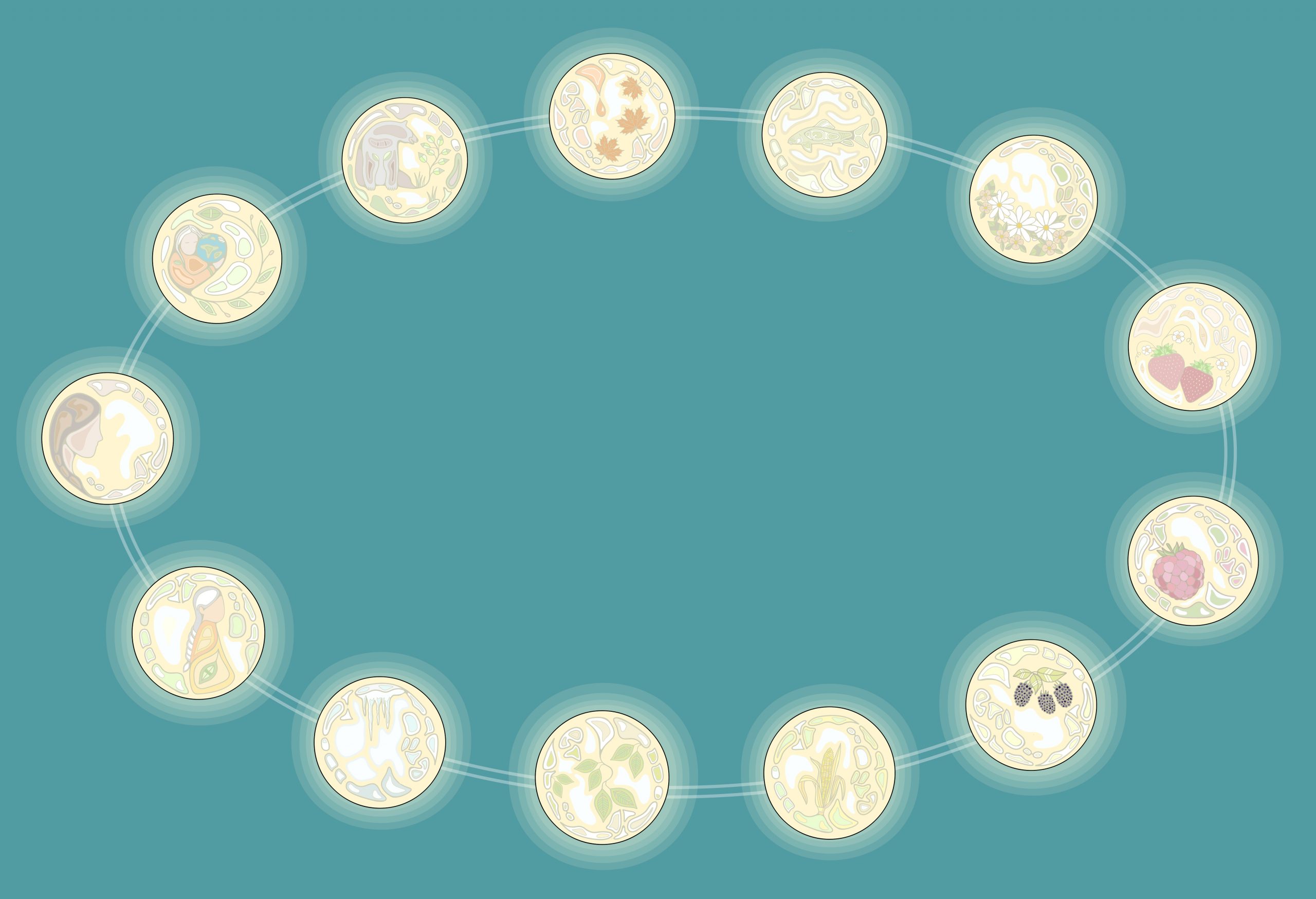
The 13 Moons: A Year of Teachings, Balance, and Renewal
Across many First Nations, Inuit, and Métis communities, the year is understood not as twelve months but as thirteen moons, each carrying its own teachings, responsibilities, and relationships. These moon cycles reflect the natural world, waters, plants, animals, and seasonal change. They guide communities in living with balance, gratitude, and reciprocity. While teachings vary across Nations, the spirit of the 13 moons remains consistent: ‘We are part of creation, not separate from it’. Many Nations, including Anishinaabe, Haudenosaunee, and Cree, begin each moon’s cycle with the return of the full moon (as noted in this blog), while others follow the new moon, reminding us that each Nation is guided by its own teachings and ways of knowing.
Spirit Moon – January 3

Manidoo Giizis (Anishinaabemowin), or the Spirit Moon, is a time of deep reflection, prayer, and connection with the spirit world, inviting people to slow down, listen inwardly, and honour the teachings passed through generations. In many Anishinaabe communities, winter becomes a season for storytelling and strengthening family relationships, reminding us that healing begins with stillness and the tending of our inner fire. Cree teachings describe this moon as a period when the spirit world is closest, guiding individuals to reconnect with ancestral memory, while Haudenosaunee knowledge speaks of the quiet renewal of the Good Mind and a reaffirmation of responsibilities to the natural world before the planting cycle begins.
Bear Moon – February 1

Mkwa Giizis (Anishinaabemowin), or the Bear Moon, reflects the teachings of the bear as protector, healer, and teacher of medicines, stirring in its den as a symbol of renewal and awakening strength. For many Anishinaabe healers, this moon reinforces the responsibility to care for community wellness, encouraging people to check on loved ones and nurture their own emotional and physical health. Inuit teachings connect this moon to deep winter, when polar bears model endurance and careful energy use as the land slowly shifts toward returning light, while Haudenosaunee knowledge honours the bear as a guardian of medicines, reminding people to care for their bodies in preparation for the coming thaw.
Sugar Moon – March 3

Ziizibaakwad Giizis (Anishinaabemowin), or the Sugar Moon, signals the return of warmth and the flowing of maple sap, a gift that nourishes communities after a long winter and brings families together in the sugar bush to harvest, teach, and celebrate renewal. This moon represents balance and the sweetness that follows hardship, encouraging honesty and clarity of spirit, much like the clear sap itself. Cree teachings mark this as the first true sign of spring, when the land softens and life‑giving migrations begin to return, while Inuit knowledge connects this moon to lengthening daylight, guiding hunters to observe shifting snow and ice as animals move into their seasonal patterns.
Suckerfish Moon – April 1 (Anishinaabe)

The Suckerfish Moon, or Namebine Giizis, honours the suckerfish, which plays a vital role in cleansing waterways during spawning season. This moon teaches about purification, responsibility, and the interconnectedness of all beings. For many Anishinaabe communities, it is a time to prepare for planting, clean homes, and refresh community spaces. The suckerfish reminds us that even the smallest beings contribute to the health of the whole ecosystem. This moon encourages humility and service, doing the quiet, necessary work that sustains life.
Flower Moon – May 1 (Cree & Anishinaabe)

Among Cree and Anishinaabe peoples, the Flower Moon marks the blooming of medicines and the return of vibrant colours to the land. This moon celebrates beauty, growth, and the renewal of relationships with plant relatives. It is a time for gathering early medicines, offering tobacco, and teaching youth about respectful harvesting. The Flower Moon encourages gratitude for the generosity of the land and reminds us to nurture our own growth with the same care we give to the plants.
Big Spirit Moon / Grandmother Moon – May 31 (Various Nations)

The thirteenth moon appears when the lunar cycle creates an extra moon in the year. Many Nations view this moon as a time of renewal, healing, and rebalancing. Some teachings describe it as a ‘Grandmother Moon’ who watches over the other moons, offering guidance and wisdom. Others see it as a time to revisit unfinished responsibilities or to set intentions for the coming cycle. Because this moon does not fall in the same month each year, it symbolizes flexibility and the importance of adapting to life’s rhythms.
In Anishinaabe teachings, this moon is often described as a balancing moon, a time to restore harmony, revisit teachings, and prepare spiritually for the next cycle. Haudenosaunee teaches that it is not given a fixed name because its appearance is not fixed; instead, it is received as a gift that restores balance. Cree communities often refer to it as the Moon of Returning or the Moon of Rebalancing, honouring the land’s rhythms and acknowledging that the natural world does not follow colonial calendars. Inuit teachings, shaped by regional and seasonal hunting cycles, describe the extra moon as a Moon of Plenty or a Moon of Preparation, understood not through fixed naming but through seasonal relationships.
Strawberry Moon – June 29 (Haudenosaunee & Anishinaabe)

The Strawberry Moon is a time of celebration, forgiveness, and community. For the Haudenosaunee, strawberries are considered the “leader of the berries” and are used in ceremonies that honour peace and reconciliation. Anishinaabe teachings also connect strawberries to the heart, reminding people to lead with kindness and compassion. This Strawberry Moon invites communities to gather, feast, and strengthen relationships. It is a time to release old hurts and welcome new beginnings.
Raspberry Moon – July 29 (Anishinaabe)

The Raspberry Moon, or, Miskomini Giizis, teaches about gentleness and the importance of protecting the vulnerable. Raspberries are delicate and require careful harvesting, reminding us to approach relationships with patience and care. This moon is often associated with teachings for young women and the responsibilities of nurturing life. It is a time to honour family, kinship, and the strength found in tenderness.
Blackberry Moon – August 28 (Anishinaabe)

The Blackberry Moon, or Odatagaagomini Giizis, represents readiness and preparation. Thimbleberries ripen quickly and must be gathered at the right moment, teaching the importance of timing and awareness. This moon encourages people to prepare for the coming fall by gathering foods, preserving medicines, and organizing community resources. It is a reminder that planning and foresight are acts of care for future generations.
Corn Moon – September 26 (Haudenosaunee)

For the Haudenosaunee, the Corn Moon is part of the harvest cycle that honours the Three Sisters: corn, beans, and squash. Corn is considered a sacred sustainer of life and is celebrated through ceremonies that give thanks for the harvest. This moon teaches about interdependence, as the Three Sisters grow together in mutual support. It is a time to gather food, share with community, and honour the labour of those who tend the gardens.
As one moon fades and another rises, these reflections will continue. Join us under the next moon for more teachings about the 13 Moons.
Artwork by Hawlii Pichette.